Central Florida homeowners know that summer heat and relentless humidity can put their roofs to the test. One key element that determines how well a roofing system withstands these conditions is attic ventilation. Inadequate airflow allows heat and moisture to build up beneath the roof, which can drive up cooling costs, cause wood rot, and drastically shorten the life of your shingles. Learning how to ensure proper attic ventilation is vital to protect the longevity and efficiency of your home.
The Science Behind Attic Ventilation
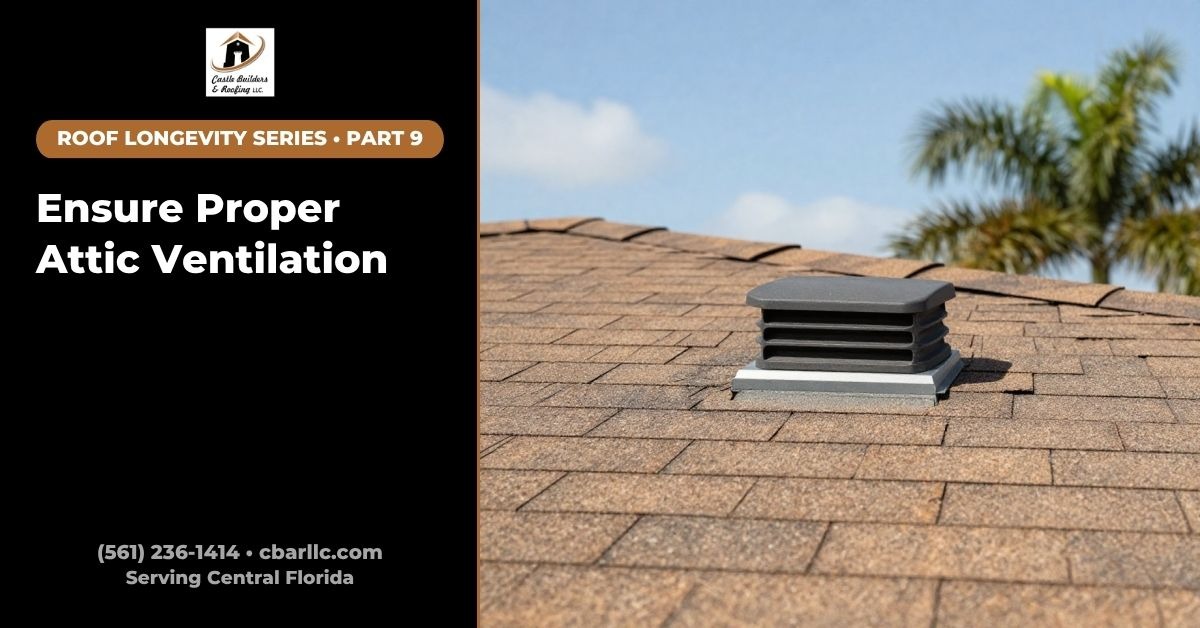
Attic ventilation is more than just placing a vent or two on the roof. Well-designed systems combine ridge vents at the peak with soffit vents installed under the eaves. This creates a natural convection process: cooler air enters through the soffit vents, pushes the hot air up, and exhausts it out the ridge vents. In Central Florida, where attic temperatures can soar past 130 degrees during summer, this ventilation is critical.
Without steady airflow, heat lingers in the attic and transfers down into living spaces. This not only stresses your air conditioner but also bakes the roofing materials from below, leading to curling, blistering, and premature shingle failure.
Moisture Control and Your Roof’s Lifespan
Central Florida’s humidity lingers year-round, making moisture control inside the attic just as important as managing heat. When warm, moist air gets trapped in the attic, it condenses on wood surfaces and insulation, setting the stage for mold, mildew, and wood decay. Over time, this intrusion can weaken the roof deck and ruin insulation, often going unnoticed until serious (and costly) issues arise. Proper attic ventilation keeps moisture moving out of the space, allowing the roof structure and insulation to stay dry, protecting both your health and your home investment.
Signs of Poor Attic Ventilation
Homeowners should keep an eye out for symptoms indicating their attic may not be vented properly. These may include:
-
Hot or stuffy air in upstairs rooms
-
Excessive energy bills due to overworked HVAC systems
-
Damp insulation or visible mold in the attic
-
Ice dams forming along the eaves in the winter
-
Shingle discoloration or curling
If you notice any of these issues, it may be time for a ventilation assessment from a trusted local roofing contractor.
Choosing the Right Roofing Partner
Selecting the right contractor for your ventilation needs is crucial for Florida homes. A professional will evaluate the size and design of your attic, calculate the correct ratio of intake and exhaust vents, and suggest tailored additions like baffles or powered attic vents if necessary. Look for contractors offering roof replacement, roof repair, and storm damage restoration services, as these companies are familiar with the challenges unique to Central Florida’s weather patterns and construction styles.
Get a Free Roofing Evaluation in Central Florida
Is your attic trapping heat and stressing your roof? Get a free inspection anywhere in Central Florida. DM us or call (561) 236-1414 today!