
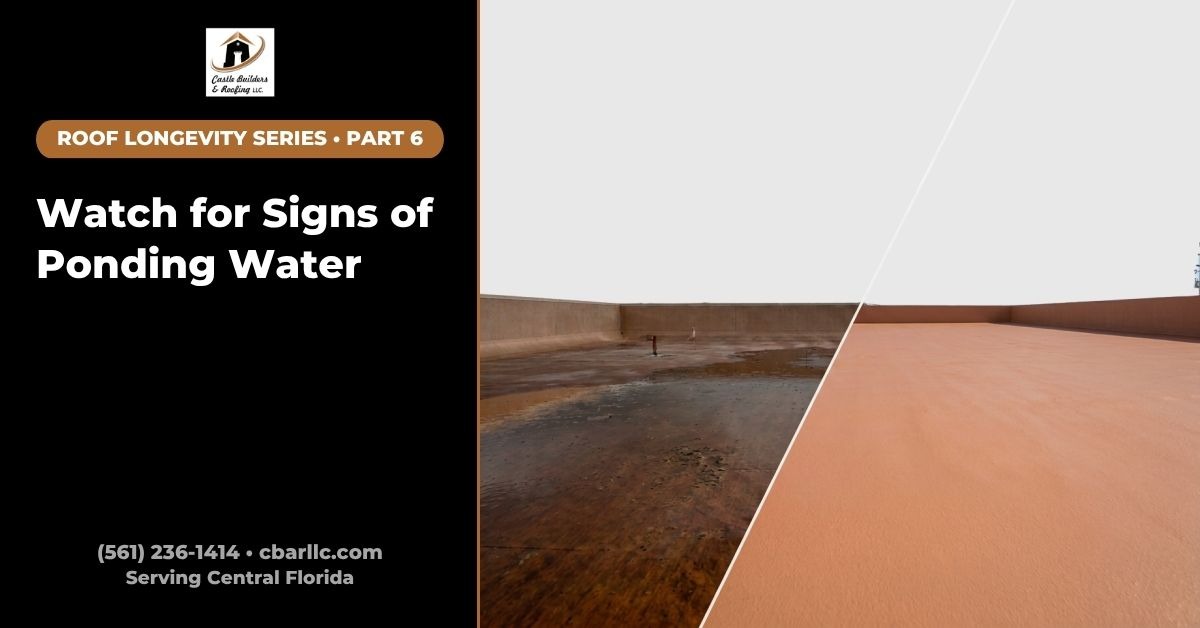
Ponding water is a warning sign no property owner should overlook, especially on commercial roofs with flat or low-slope designs. In Central Florida, where heavy rainfall is both frequent and severe, ponding on your commercial roof can result in significant damage and ongoing maintenance concerns. This lingering water forms when roofing materials sag or the drainage slope is altered, often as a result of age, weather, or improper installation. If left unaddressed, these standing puddles foster leaks, compromise the roofing membrane, and threaten the structural integrity of your entire building. It’s essential for building owners and facility managers to regularly inspect their roof surfaces after any heavy storm, as Central Florida routinely experiences intense downpours that can quickly exacerbate these issues.
How Ponding Water Forms on Commercial Roofs
Most commercial roofs in Central Florida feature a low-slope or flat construction, which is particularly susceptible to ponding. Simply put, ponding occurs when water fails to drain from the roof within 48 hours of precipitation. This problem is usually caused by:
-
Settling or sagging of roof decking
-
Insufficient or clogged drains and scuppers
-
Poor installation or deterioration of roofing materials
-
Damage from foot traffic or rooftop equipment
With the tropical climate of Central Florida, these factors become even more significant. Summer storms can deposit inches of rain in a short amount of time, overwhelming drainage systems that might otherwise be adequate in other regions.
Why Restoring Drainage Slope Is Critical
A well-designed commercial roof in Central Florida relies on its slope to guide water toward drains and prevent accumulation. Over time, several factors can compromise this slope. Sagging from the weight of ponded water, deteriorated insulation, or shifting due to structural movement are all common causes seen in this region. Once the slope is impacted, water starts pooling, and this is when leaks become inevitable. Beyond just leaks, standing water exacerbates UV damage and accelerates the deterioration of roof membranes.
A professional roofing inspection can identify where drainage has failed. Roofers may use techniques such as tapered insulation systems or adding new drains to restore the intended water flow and extend the life of your roof.
Visible Signs of Ponding Water to Look For
After a storm, walk the perimeter of your building and look for these warning indicators:
-
Shiny or reflective patches that linger after the rest of the roof is dry
-
Discoloration or staining on the surface indicating repeated water pooling
-
Visible sagging or unevenness in roof sections
-
Vegetation growth, such as algae or moss, in areas that stay wet
-
Water lines around rooftop HVAC or mechanical units
Spotting these signs early is crucial. The professionals at Castle Builders And Roofing have addressed ponding issues across several commercial properties throughout the Central Florida area, where even a minor standing puddle can indicate trouble brewing beneath the surface.
Preventive Maintenance to Avoid Roof Ponding
Preventing ponding water is a proactive task. Regular roof inspections and cleaning ensure drains, scuppers, and downspouts remain clear year-round. Property owners and managers in Central Florida should have their roofs professionally examined at least twice per year, especially after major weather events. This allows minor issues such as roof leak repair and deteriorating membranes to be handled before they become costly emergencies. Installing additional drains or using tapered insulation are solutions commonly recommended for persistent ponding areas.
Get a Free Roof Inspection and Protect Your Investment
Seeing standing water on your flat roof? Our team offers free inspections in Central Florida. DM us or call (561) 236-1414 today!